








With the growing concern of childhood obesity (overweight by more than 30 pounds) – rates have tripled in the past 30 years, and approximately 30% of all children are obese – we must provide good, healthy snack alternatives. Along with obesity is the epidemic and increased rate of diabetes, especially among children. So avoidance of high-calorie sodas, sport drinks, cookies and cakes, chips, and microwave snacks is a must. Speaking of soda, I feel strongly that sodas such as Coke, Sprite, Dr. Pepper, orange, etc. should never be brought into the home! (Especially on Shabbat.)
Why Nuts and Seeds Beat Junk Food
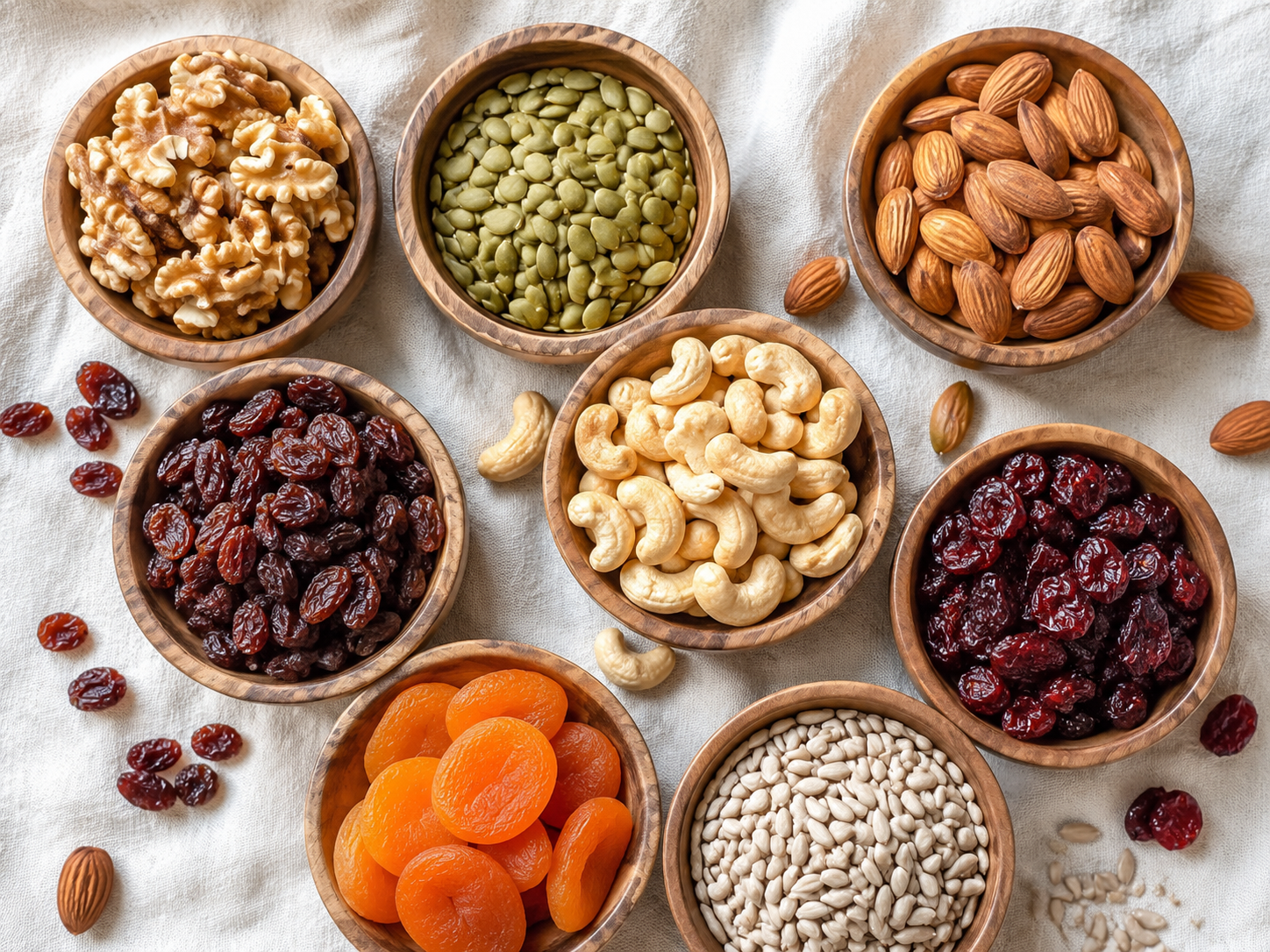
A great alternative is nuts and seeds. There are many health benefits of nuts and seeds. Do not be wary of the fat content – the fat within is good fat, mono and poly unsaturated fats. These good fats raise the good HDL cholesterol and typically contain essential vitamins like A, E, D and K. Please note: peanuts are not nuts but legumes. They are starchier and less rich in minerals and other important nutrients. They are a common food allergy, partially due to fungus content. So this is one “nut” to avoid. The excellent nuts include almonds, cashews, walnuts, macadamia, hazelnuts, pecans; and seeds such as sunflower and pumpkin. Of course organic is the best choice, and also dry-roasted vs. oil-roasted, and sea salt vs. regular salt or salt-free. You can also buy raw nuts and seeds and roast them yourself.
What the Research Says About Nuts and Longevity
Because of a warning by the FDA, Department of Health, to the walnut company Diamond Food Company, which claimed walnuts to be heart healthy, a wonderful research project was undertaken. The study, cited in The New England Journal of Medicine (NEJM) November 2013 issue, revealed: 7 or more servings (1 ounce) of nuts (almonds, cashews, walnuts, etc.) cut the risk of dying by 1/3! It further showed a reduction in death by cancer of 11%, kidney disease – 29%, respiratory disease – 24%, heart disease – 29%, stroke – 11%, infectious disease – 23%.
Another study of Seventh Day Adventists, a religious group of people who are vegetarians and eat a low-fat, plant-based diet, was done. This study wanted to investigate if including “fatty” nuts in their diet would have either a good or adverse effect. Those in the group that ate 5 or more servings of nuts a week had a 48% reduction in coronary heart disease and a 51% reduction in non-fatal heart attacks.
Other studies, like the Iowa Health Study, Harvard School of Public Health and Loma Linda University study, found that men and women who ate nuts 4 or more times a week were 40% less likely to die of heart disease, with a noticeably reduced risk of sudden cardiac arrest. One mechanism for this protection is that nuts contain phytosterols, which bind cholesterol (especially “bad” LDL) and sweep it out of the body.
Nuts, Seeds and Healthy Weight
As far as weight is concerned, Richard Mattes, PhD, a professor of nutrition at Purdue University, found that when people added 1-2 ounces of nuts a day to their diet, they did not gain weight. Other studies revealed that 3 times as many people who were trying to lose weight were able to stick to a diet that included moderate fat content in the form of nuts and seeds. The significant factor here is the “satiety factor.” Dieters feel fuller longer after eating nuts and ate less during the day, because nuts are a rich source of fiber, as well as some protein and fat. Nuts and seeds are low-carb foods, with a low glycemic index. The Harvard School of Public Health also reported that type 2 diabetes risk was 30% lower in women who consumed 5 or more servings a week of nuts.
Choosing the Right Nuts and Seeds
Sunflower seeds provide the most potent combination of vitamins and minerals of any common nut or seed. One ounce serving provides more than 30% of the daily value of 6 vitamins and minerals, including vitamin E, phosphorus, selenium and manganese. Pumpkin seeds are equally beneficial and also have twice the omega-3 in ¼ cup as a 4-ounce serving of salmon. Both flax and chia seeds are rich in omega 3 and 6 essential fatty acids. Walnuts have the most omega 3 of any common nut. Brazil nuts are loaded with selenium, which is a mineral found to be vital for thyroid function and a general powerful antioxidant (preventing cancer). Almonds are a great source of calcium, copper, magnesium, phosphorus and have 6 grams of protein per 1 ounce serving. Pecans contain the highest antioxidant capacity of all nuts.
So a handful or two a day of your favorite nuts and seeds instead of junk food laden with sugar and chemicals is the way to go! Adding some seeds to your green salads, an entrée or steamed veggies works too!
For any health related matters, diet and nutrition, weight loss, hormone balancing or for a “second opinion” please contact Dr. Bekermus at 845 369 1310 or DRBEK.com. Thanks!